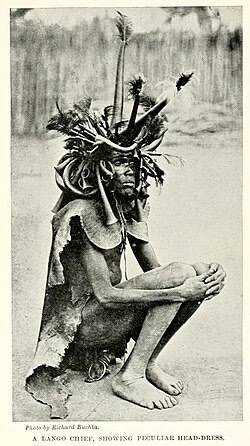
Traditional Attire
Beads, brass wire and ivory
Necklaces, coils of wire, ear and lip ornaments, and the ivory bracelet that marked chiefly descent.
Read moreLeather girdles, the ariko apron of metal chains and the skins used in Lango dress.
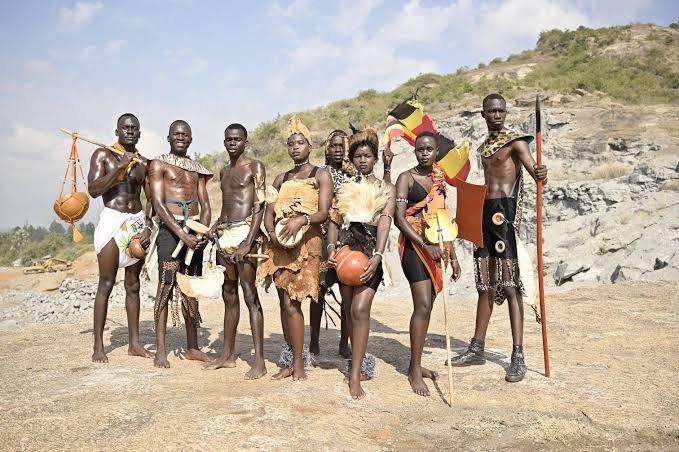
A century ago most Lango men wore ornaments but little clothing; in the north-east some wore a small goatskin. Women and girls wore leather and fibre.
Skins, beads and shells are still a part of the costume of Lango dancers today.
Source: J. H. Driberg, The Lango: A Nilotic Tribe of Uganda (London, 1923), pp. 62–65; public domain. It describes life about a hundred years ago as a colonial administrator saw it, so customs have changed and some may be told differently today. Elders and families are invited to correct it and add what they know.
Necklaces, coils of wire, ear and lip ornaments, and the ivory bracelet that marked chiefly descent.
Read moreBeaded caps, feather crowns and named haircuts: how Lango men dressed their hair a century ago.
Read more